


Digital Nomad in Peru: the good, the bad, and the real WiFi + coworking situation
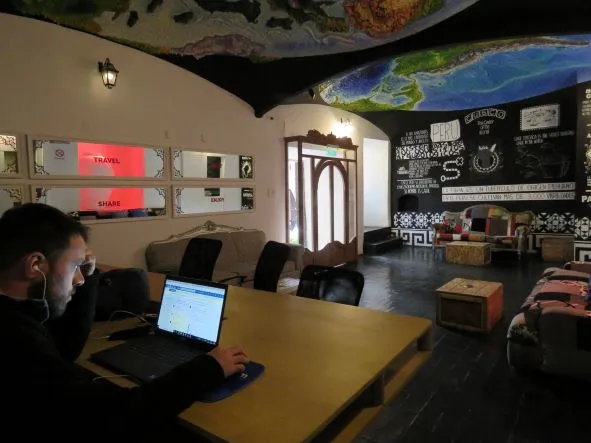
Being a digital nomad looks like a highlight reel: laptop open in a cute café, a mountain view in the background, a quick Zoom call, then straight into a street-food mission or a sunset walk. Peru can absolutely give you that vibe… but it can also test you in very real ways: Wi-Fi that’s not always stable, altitude that messes with your energy, travel days that eat your calendar, and an itinerary that fills itself because “it’s just one more tour.”
This guide is for you if you’re planning a digital nomad Peru trip and want to do it without your work suffering. It’s an honest mix of excitement and logistics: what’s worth it, what’s tricky, what things actually cost, and how to build a sustainable travel rhythm (for your mind, your budget, and your internet connection). If you do it right, Peru is one of those rare places where productivity and adventure can genuinely coexist: incredible food, culture, landscapes, and a social backpacker scene that makes it easy to meet people—even if you arrive solo.
And yes, we’ll talk about the stuff people skip. Because not everything is a perfect “workation.”
1) Is Peru good for digital nomads? Yes—if you have a strategy
Peru works well for remote workers if you accept three truths:
Not every destination is built for remote work, especially outside major cities.
Internet is not a detail—it’s the foundation (plan it like you plan transportation).
You need to respect the local rhythm: things can feel slower, more human, and more spontaneous. That’s amazing… unless you’re trying to run your work life on pure speed.
The good news: Peru is easy to combine work, social life, and experiences. The not-so-good news: if you don’t structure your time, you can slide into “survival mode” (and your deadlines will feel it).
If you’re looking for a friendly base with a social vibe, solid location, and that classic backpacker energy, starting with hostels in Peru that understand young travelers is a simple move—comfortable spaces, common areas, and the magic of making friends in 10 minutes. You can start by checking Pariwana’s official site here: https://www.pariwana-hostel.com/es/
2) Visas and legality: the boring part that saves your trip
Before coworking spaces and cafés, you need to know one thing: how long can you legally stay in Peru?
Tourist entry (the most common route)
When you enter Peru as a tourist, your permitted stay is determined at entry (stamp/registration) based on what you’re granted. There’s a general framework allowing up to 183 days depending on conditions and what’s authorized. For official guidance, check Peru’s government information page here: https://www.gob.pe/en/36240-apply-for-a-tourist-visa-to-enter-peru
“Digital nomad visa” in Peru: is it a thing?
Peru’s immigration authority announced a new “digital nomad” migratory status intended for foreigners who telework for companies outside Peru, with a stay of 365 days (as communicated by Migraciones). If you’re planning a long stay, this is a big deal, because it signals official support for longer remote-work trips. See the official announcement here: https://www.gob.pe/institucion/migraciones/noticias/868954-nueva-calidad-migratoria-nomada-digital-facilitara-a-extranjeros-teletrabajar-desde-el-peru
Real talk: rules and procedures can change, and the practical details may vary depending on nationality, timing, and implementation. If you’re staying for months, rely on official sources and plan early.
3) The #1 factor: Internet (the honest truth)
If Peru were a video game for digital nomads, the final boss would be Wi-Fi.
The good
In Lima—especially in well-serviced urban areas—reliable internet is easier to find in coworkings and many cafés.
In Cusco, you can work comfortably in central areas, though performance varies more.
Coworking spaces are usually more stable than random accommodation Wi-Fi.
The bad (and it matters)
In many places, Wi-Fi is “fine… until it isn’t.” When it drops, it drops hard: frozen calls, failed uploads, stress spikes.
In smaller cities, infrastructure can be inconsistent, and weather or high demand can hit performance.
If your job involves daily camera-on calls, you need a backup plan—non-negotiable.
Your digital survival kit
Local SIM + data plan: mobile data can save your day when Wi-Fi fails.
Universal adapter: Peru commonly uses Type A/C plugs, but don’t assume everything fits perfectly.
Strong power bank: for café days and moving around.
Smarter scheduling: if your internet is best early, plan deep work and heavy uploads in the morning.
4) Lima: the easiest base for work (and for meeting people)
If it’s your first time doing Peru as a remote worker, Lima is the smoothest landing. Big city advantages: services, options, and better overall connectivity.
Where to stay in Lima if you work remotely
You want three things: location, safety, and easy access to cafés/coworkings. Miraflores is a practical area to start—walkable, popular with travelers, and full of places to work from. If you want a backpacker-friendly base and a good launchpad, check Pariwana Lima here: https://www.pariwana-hostel.com/es/hostels/lima/
Coworking in Lima (for serious work days)
When you need a “no excuses” setup, go coworking. Two well-known options:
WeWork Lima (locations and plans): https://www.wework.com/es-LA/l/coworking-space/lima
Comunal (local coworking network): https://comunal.co/
You don’t need coworking every day. Many nomads go hybrid: coworking 2–3 times a week for meetings and deep work, then cafés/common areas the rest.
Cafés + reality-based routine
Lima can be intense. Traffic is real, distances are deceptive, and “quick errands” can turn into an hour. If you’re working remotely, you’ll do better by:
Keeping your living and working spots inside the same area (don’t make cross-city commutes your daily habit).
Choosing cafés with outlets and decent signal, but not depending on them for critical calls.
The social side: Lima pulls you in
Here’s what happens: you arrive solo, and suddenly you have plans. If you like hostels with energy, activities, and group vibes, it’s the easiest way to meet people without forcing it. To see what daily activities look like (and choose which nights are “social” vs “work-first”), check Pariwana Lima’s activity lineup here: https://www.pariwana-hostel.com/es/pariwana-limas-activity-lineup/
5) Cusco: amazing to live in… trickier to produce (unless you adapt)
Cusco is magic. And it also demands that you slow down. For remote work, that can be either your best experience or your biggest frustration.
The good
Endless inspiration (seriously, every street).
Culture, markets, viewpoints, day hikes.
A traveler scene that makes it easy to connect.
The bad (and it’s not your fault)
Altitude: if you arrive from sea level and expect to perform at 100% instantly, your body may disagree.
Cold nights and early mornings can affect your routine if you’re not prepared.
Internet can be more variable than in Lima depending on where you are.
Where to stay in Cusco
If you want a walkable base close to everything and an easier balance between tours and work, a central location helps a lot. Pariwana Cusco is here: https://www.pariwana-hostel.com/es/hostels/cusco/
Coworking in Cusco (when you need stability)
If you need consistent connection for calls or focused work, coworking is worth it. One example with clear services is Ayni Center: https://aynicenter.com/
The key in Cusco: “realistic rhythm”
Cusco is ideal for a daily flow like:
4–5 hours of work early
a proper lunch
a light afternoon plan (walk, market, culture)
a social night (or an early sleep)
Trying to do 8–9 hours of work daily plus heavy tours is the fastest route to burnout.
6) What if you want to work while traveling all over Peru?
This is where you decide between “epic trip” and “serious work” (and the truth is you can do both, but not at maximum intensity every day).
Think in blocks:
Productivity base block: Lima or Cusco (minimum 1–2 weeks).
Adventure/movement block: destinations where you work less and experience more.
Recovery block: days with no tours, no transfers, just routine.
This approach prevents your “budget travel Peru” dream from turning into “exhausting travel Peru.”
7) Real costs: what it actually takes to be a digital nomad in Peru
Peru can be very budget-friendly… unless you fall into the “I’m working, I deserve it” trap every day (it feels great, and then you check your spend).
Common expense categories (the useful way to think about it)
Accommodation: varies by city, neighborhood, and room type (shared vs private). If you’re hunting for value, focus on “stability per dollar”: safe location, good sleep, reliable workspace, decent Wi-Fi.
Coworking: usually priced by day/week/month. Use it strategically rather than automatically.
Food: you can eat extremely cheap if you eat like locals—or spend like a European capital if you go fancy café twice a day.
Transportation: in Lima, time is money (traffic); in Cusco, walking saves both.
Rule of thumb: don’t chase the cheapest option—chase the most stable option. For remote work, paying a bit more for comfort and connection can be an investment, not a luxury.
8) The real work rhythm: how not to crash halfway through
Let’s be direct: being a digital nomad isn’t just “working from another country.” It’s maintaining your professional life while your travel life tries to hijack your schedule.
Trap #1: “Since I’m here…”
“Since I’m in Cusco, I have to do Machu Picchu.”
“Since I’m in Lima, I should go out every night.”
“Since I’m in Peru, I need to see everything.”
Suddenly: no rest, no focus, and your tasks pile up.
A routine that actually works
Monday to Thursday: heavier work, light afternoons, 1–2 social nights.
Friday: lighter work + social plans.
Weekend: tours and adventures (or one big day + one recovery day).
Also: leave space to do nothing. It sounds unproductive, but it’s the thing that makes the whole trip sustainable.
9) Social life: making friends without losing your week
One of the easiest things in Peru (especially in hostels) is meeting people. If you arrive solo, it’s almost inevitable that you’ll end up with a group.
The good
Your social life levels up fast.
You find buddies for tours, meals, nightlife, random adventures.
You reduce the isolation that can hit remote workers.
The bad
If you’re the “just one beer” type and end up doing karaoke at 2 a.m., your productivity pays the price.
You can slip into “party week” and realize you barely worked.
The smart move is choosing your social nights on purpose and using organized activities so you don’t rely on endless spontaneity. In Cusco, you can see the daily hostel activities here: https://www.pariwana-hostel.com/es/pariwana-cuscos-activity-lineup/
10) Tours and experiences: how to do them without destroying your calendar
Peru is built for experiences. The trick is scheduling them like they’re important meetings—with buffers and recovery.
Practical advice that saves entire weeks
Don’t schedule critical meetings the day after a long tour.
After an intense tour day, plan light tasks the next day (emails, admin, planning).
When you change cities, assume that day is not a deep-work day.
If you want to explore tours in a way that fits a backpacker-style trip (without turning into an autopilot tourist), Pariwana works with a partner agency. You can browse tour options here: https://guest.tourpit.com/pariwanalima
11) Safety and street smarts for remote workers
Peru, like anywhere, rewards common sense. You don’t need to be paranoid—you need to be smart.
Simple rules:
Don’t flash your laptop unnecessarily on the street.
Avoid using your phone in places where you don’t feel comfortable.
Use trusted taxi/app rides at night.
If you work in cafés, don’t sit right by the entrance or with your back to heavy foot traffic.
If you’re traveling solo, your community helps too. Once you meet people, you share routes, safety tips, and real neighborhood knowledge.
12) Health: altitude, energy, and your ability to perform
If you only remember one part of this guide, make it this: altitude changes your productivity.
In Cusco and the Andes, you might feel:
fatigue
headaches
weird sleep
shortness of breath on stairs
Don’t try to “outwork” altitude with infinite coffee. Better strategy:
hydrate
sleep
eat properly
take the first days slow
Rest doesn’t ruin your work. Overpushing does.
13) Responsible travel: better trips, calmer work
Being a digital nomad can also mean traveling more intentionally. Instead of racing through a checklist, you can travel with more awareness: support local businesses, respect communities, and treat Peru like a real place—not just a background for content.
Easy, non-preachy ways to travel better:
Buy from markets and local shops.
Avoid tours that exploit animals or communities.
Follow rules in natural areas and cultural sites.
Reduce plastic: refillable bottle + refills.
It’s better for the destination—and it also feels better for you.
14) The best “hack” for not getting lost: simple planning + good maps
Peru is big. Your energy is limited. Your work calendar is real. Having clear references for routes and neighborhoods helps a lot. If you want practical backpacker maps (useful for planning your “base weeks” vs “adventure weeks”), Pariwana offers free maps here: https://www.pariwana-hostel.com/es/free-maps/
15) A realistic 4-week Peru digital nomad plan (that won’t break you)
Week 1: Lima (landing + setup)
SIM card, routine, coworking test
heavier work days
1–2 social nights
Week 2: Lima (productivity + city life)
coworking days for meetings
explore without rushing
solid routine
Week 3: Cusco (adaptation + moderate focus)
2–3 easy days for altitude
early work sessions
lighter tours
Week 4: Cusco + adventure (with buffers)
one big tour planned
lighter work days
social wrap-up
Can you do more? Sure. Should you? Depends on your energy and your job.
16) Quick FAQ (so nothing surprises you)
Is Peru good for remote work with daily video calls?
Yes, especially if you use coworkings for important meetings and keep a mobile data backup for emergencies.
Should your base be Lima or Cusco?
For pure productivity and reliability: Lima. For inspiration and travel vibes: Cusco—just plan for altitude and variability.
How do you avoid wasting time figuring things out?
Keep official FAQs and key info handy: check-in times, services, rules, etc. If you’re comparing accommodation, official FAQs prevent assumptions and last-minute stress: https://www.pariwana-hostel.com/es/preguntas-frecuentes/
Where can you find more backpacker-style guides like this?
You can explore more routes, tips, and travel stories here: https://www.pariwana-hostel.com/es/blog/
Honest wrap-up: Peru is incredible—if you do it smart
Traveling Peru as a digital nomad is a perfect mix of chaos and beauty. The good: amazing food, fast friendships, real inspiration, and the feeling that your life got bigger. The bad: if you improvise too much, Wi-Fi will betray you, altitude will slow you down, and your workload will stack up.
The winning formula is simple (and powerful): base + structure + flexibility.
A base to work.
Structure so you don’t spiral.
Flexibility so Peru can surprise you (because it will).
If you take only one idea from this: the best digital nomad isn’t the one who does the most—it’s the one who keeps a sustainable rhythm without breaking.
✍️ Pariwana Editorial Team
Practical travel tips written by backpackers, for backpackers.
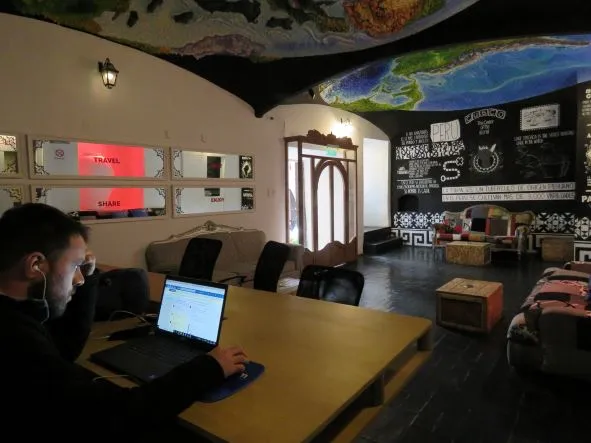
Work remotely and explore Peru. Discover Pariwana’s free coworking spaces in Lima and Cusco — designed for digital nomads on the move.