


Ultimate Guide to Bus Travel in Peru: Long Routes, Comfy Buses and Backpacker Tips
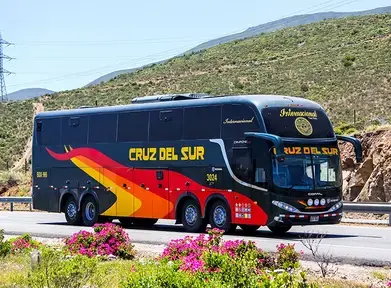
Travelling across Peru by bus is almost a backpacker rite of passage. It’s cheap, relatively comfortable if you choose the right bus company, and it lets you see how the country changes: from coastal desert to the Andes, from the Pacific Ocean to the jungle. What most people underestimate until they sit down in their seat is this: Peru is huge. These are not 3–4 hour rides. Many bus journeys are 10, 15 or even 20+ hours non-stop.
In this guide we’ll do what all of us wish we had before our first long haul bus in Peru:
Explain how long-distance buses in Peru work.
Show you approximate travel times between key cities, using a reference table of routes across the country.
Talk about what it’s really like to travel with good bus companies, with Wi-Fi on board, food included and seats that recline almost like a bed.
Recommend safe, formal companies with lots of reviews, such as Cruz del Sur, Civa, Oltursa, and hop-on hop-off style buses like Peru Hop and Bolivia Hop.
Share practical safety and comfort tips so you survive 20+ hour journeys without hating your life.
The goal is to help you plan a realistic route, without the classic “wait, what do you mean Lima – Cusco is 21 hours… if everything goes well?” shock. 😅
1. Why travelling by bus in Peru is totally worth it
Even though domestic flights are more common now, for backpackers the bus is still the king of transport in Peru. And it makes sense.
1.1. It’s cheaper and more flexible
On long routes like Lima–Cusco, Lima–Arequipa or Lima–Piura, a comfortable night bus is much cheaper than a flight, and it also saves you a night of accommodation. If you’re travelling on a budget, it’s almost impossible to ignore buses.
Plus, hop-on hop-off systems like Peru Hop let you buy one flexible bus pass and jump on and off at different cities along the way. It’s basically a backpacker-friendly way to explore Peru overland.
1.2. You actually see the country
Between Lima and Arequipa you move from the chaos of the capital to endless desert. Between Arequipa and Puno you cross high Andean landscapes with llamas and vicuñas. Going from the northern highlands down toward the jungle, you’ll see green mountains and deep valleys.
On a plane you only see clouds. On a bus you see the real Peru: roadside markets, tiny villages, improvised bus stops, food stalls and desert sunsets through the window.
1.3. Peruvian buses can be surprisingly comfortable
When you go with good companies, you are not just getting on “any random bus”:
Seats that recline 160° or even close to 180°, perfect for sleeping.
On-board Wi-Fi on many routes.
Basic entertainment or personal screens on some services.
Hot meals and snacks included on certain levels of service.
You’ve seen it yourself: with a good bus and a proper reclining seat, you sometimes sleep better than in a hostel dorm. But that only happens when you choose formal, well-rated operators, not the cheapest option someone shouts at you in a bus terminal.
2. Understanding distance and time: Peru is bigger than it looks
On the map, Lima and Cusco don’t look that far apart… until you read the fine print: the bus can take around 21–24 hours, and if there are roadworks, traffic jams or delays, it can be even longer.
Using the travel time table as a reference, here’s a summary: these are approximate times under normal conditions, and you should always consider extra time for traffic, stops and weather issues. Think of these as guidelines, not guarantees.
3. Classic bus routes in the south of Peru
The southern route is the most popular for backpackers: the legendary loop Lima – Huacachina – Nazca – Arequipa – Puno – Cusco, with some travellers also heading down to Tacna and into Chile.
3.1. From Lima down the coast: Huacachina/Ica and Nazca
Key cities: Lima, Huacachina/Ica, Nazca
Approximate bus times:
Lima – Huacachina/Ica: about 4 hours
Lima – Nazca: about 6 hours
Huacachina/Ica – Nazca: about 3 hours
This is a gentle way to start your overland trip. Many travellers leave Lima in the morning, arrive to Huacachina around midday, spend a night there for sandboarding and pisco, then continue to Nazca to see the famous lines by plane or from the viewpoints.
If you base yourself in Lima before setting off, staying in Miraflores is a smart move: it’s safe, fun and close to many bus departures. A well-located backpacker hostel like Pariwana Lima makes it easy to grab a taxi to the bus stations and meet other travellers before your trip:
👉 https://www.pariwana.com/es/hostels/lima/
3.2. Nazca – Arequipa – Puno – Cusco: heading into the Andes
Here the routes get longer and more winding as you climb into the Andes.
Nazca – Arequipa: about 9 hours
Nazca – Puno: about 15 hours (often with a change in Arequipa)
Lima – Arequipa: about 15 hours
Huacachina/Ica – Arequipa: about 12 hours
Arequipa is an amazing stop for a few days: great food, dry weather, views of volcano El Misti and easy access to the Colca Canyon. From Arequipa, many travellers continue to the high plateau:
Arequipa – Puno: about 5 hours
Arequipa – Cusco: about 6 hours
Puno – Cusco: roughly 15 hours, depending on company and stops
If you keep going toward the southern border:
Lima – Tacna: about 20 hours
Arequipa – Tacna: about 6 hours
Puno – Tacna: about 10 hours
Tacna is the main gateway to Arica in Chile. If you’re not in a rush, breaking these legs into a few overnight buses and some rest days is way more pleasant than trying to do everything back-to-back.
3.3. The big one: Lima – Cusco
On paper, the Lima – Cusco bus journey is around 21 hours. In real life – both from your experience and that of many travellers – it’s not unusual to hit 24 hours or more, even with no serious problems, just traffic, roadworks or weather.
This route crosses mountain passes and high altitude zones, with winding roads along steep drops. That’s why many travel advisories and guidebooks recommend choosing reputable companies and avoiding the cheapest overnight buses on mountain routes whenever possible.
👉 Honest tip: if you don’t feel comfortable with such a long ride, a good compromise is to fly between Lima and Cusco, and then use buses for the rest of your trip (Lima–Ica–Nazca–Arequipa, Cusco–Puno, etc.).
3.4. Cusco – Puerto Maldonado
This one appears in the notes of the table: Cusco – Puerto Maldonado: about 10 hours by bus.
This route takes you from the Andes down into the edge of the Amazon jungle. It’s a spectacular drive, but with lots of curves and big changes in temperature:
Start in chilly Cusco at altitude.
Finish in hot, humid Puerto Maldonado.
Wear layers, travel with a serious company and prepare for a very changing landscape.
If you use Cusco as your base for Machu Picchu and the Sacred Valley, staying in a central, social hostel like Pariwana Cusco makes it easier to arrange tours and long-distance buses:
👉 https://www.pariwana.com/es/hostels/cusco/
4. Bus routes in northern Peru: beaches, mountains and jungle
Northern Peru is perfect if you’re into warm weather, surf and green landscapes. The bus rides are still long, but the climate is usually milder than in the high Andes.
4.1. Lima – Huaraz, Trujillo, Chiclayo
Approximate times:
Lima – Huaraz: about 8 hours
Lima – Trujillo: about 10 hours
Lima – Chiclayo: about 12 hours
Huaraz is the base for the Cordillera Blanca, alpine lagoons and big treks. Trujillo and Chiclayo offer a mix of history (Chan Chan, the Lord of Sipán) and amazing northern Peruvian food.
Between them:
Huaraz – Trujillo: about 9 hours
Trujillo – Chiclayo: about 3 hours
These routes are long but generally easier than steep mountain roads in the south. The main enemy here is the air-con – buses love to keep it freezing, so bring a hoodie.
4.2. Cajamarca and Chachapoyas
Here things get slower and more Andean again.
Lima – Cajamarca: about 13 hours
Lima – Chachapoyas: about 22 hours
Huaraz – Cajamarca: about 16 hours
Trujillo – Cajamarca: about 7 hours
Chiclayo – Cajamarca: about 6 hours
Trujillo – Chachapoyas: about 12 hours
Chiclayo – Chachapoyas: about 9 hours
Chachapoyas is the base for visiting Kuelap, Gocta waterfall and other incredible sites in the “ceja de selva”, the transition zone between Andes and jungle. From there:
Chachapoyas – Tarapoto: roughly 4 hours by road.
These are mostly mountain and jungle roads. Here, more than ever, your rule applies: only travel with serious, well-known companies.
4.3. Heading to Máncora and the northern beaches
If you’re chasing sun and surf, chances are your trip will start or end in Máncora, one of Peru’s best-known beach towns.
Approximate times:
Lima – Máncora: about 18 hours
Huaraz – Máncora: about 17 hours
Trujillo – Máncora: about 8 hours
Chiclayo – Máncora: about 5 hours
Cajamarca – Máncora: about 11 hours
Chachapoyas – Máncora: about 14 hours
Again, don’t be fooled by the map: Lima – Máncora is basically half the country’s coastline. Many travellers break the trip in Trujillo or Chiclayo to avoid a full day non-stop on the bus.
5. Recommended bus companies in Peru (and how to choose safely)
This is where your personal experience is super useful: not all buses are the same. Your main recommendation is crystal clear:
The most important thing is to travel with formal companies that are well ranked and have lots of reviews.
Let’s look at the main options and what makes them different.
5.1. Peru Hop: hop-on hop-off from Lima to Cusco
Peru Hop is a hop-on hop-off bus system designed specifically for travellers. They mainly operate between Lima and Cusco, with stops in Paracas, Huacachina, Nazca, Arequipa and Puno.
What do you get with Peru Hop?
You buy one flexible pass and can hop on and off in different cities over several days or weeks.
Stops in less touristic places (viewpoints, towns, hidden spots) that regular public buses simply drive past.
On-board guides who speak English and Spanish, explain the route, suggest hostels and tours and help you with logistics.
Pick-ups and drop-offs from many hostels and hotels, which avoids terminal stress.
A very social, backpacker atmosphere.
For solo travellers or anyone who doesn’t speak Spanish well, Peru Hop is often the safest and easiest way to explore the classic southern Peru route.
5.2. Bolivia Hop: continuing into Bolivia
If your itinerary continues into Bolivia, Bolivia Hop offers the same concept on the Puno – Copacabana – La Paz route and beyond.
It’s also a flexible hop-on hop-off system, designed to simplify border crossings and paperwork. Their guides help with forms, cash exchange and migration queues, which can be really handy if it’s your first time crossing a land border in South America.
5.3. Cruz del Sur: the classic Peruvian bus company
Cruz del Sur is probably the best-known long-distance bus company in Peru, used by both locals and international travellers.
They operate many of the country’s main routes and offer different service levels, from standard seats to more premium ones that recline a lot further and include better meals and extra comfort.
Some of the advantages:
A large network of routes (Lima–Cusco, Lima–Arequipa, Lima–Máncora, Lima–Trujillo and more).
Several levels of service, including semi-cama and near-flat seats on some buses.
Dedicated bus terminals in many cities, which adds a layer of security and organisation.
As with any big company, experiences can vary depending on route and date, so always check recent reviews for the specific journey you’re planning.
5.4. Civa and Oltursa: strong alternatives
Two other well-known companies are:
Civa, with services like EconoCiva, SuperCiva and ExcluCiva (the premium option with very comfortable seats). They cover a huge part of the north and south coastal routes.
Oltursa, which connects many cities across Peru and also focuses on comfort and safety on long-distance rides.
Both can be a great choice especially along the northern coast (Lima–Trujillo–Chiclayo–Piura–Máncora) and on some long southern routes, especially if you book their mid or high level services.
5.5. Which companies should you avoid?
The golden rule:
Don’t get on a bus you can’t easily find online, with recent reviews.
Avoid:
Companies with no proper website or official social media.
Random buses where someone shouts destinations at you in the street and tries to push you on board.
Operators with very low review scores and many recent complaints about extreme delays, theft on board or no safety controls.
On mountain routes in particular, accidents and incidents are way more frequent with cheap, poorly regulated buses – so this is not the place to cut corners.
6. Understanding bus service types in Peru
When you buy a ticket you’ll see terms like “económico”, “semi-cama”, “cama”, “VIP”, “180°” and so on. They’re not identical between companies, but generally:
Economy / standard:
Normal bus seat with limited recline.
Fine for short trips (4–6 hours) but not ideal for overnight journeys.
Semi-cama (around 140°–160° recline):
Wider seat with more recline and a leg rest.
Good for mid-range trips (8–12 hours) if you want comfort without paying top price.
Cama / 180° / VIP:
Seats that recline very far, almost like a bed.
Often located on the lower deck.
Perfect for long hauls like Lima–Arequipa, Lima–Máncora or Lima–Cusco.
In your experience, the buses with very reclining seats, Wi-Fi and included meals make a massive difference: you can actually sleep, watch a movie, have a decent dinner and arrive feeling almost human.
👉 For anything above 15 hours, it usually makes sense to pay extra for a cama or VIP seat. Your back, your mood and your next travel day will thank you.
7. Safety tips for bus travel in Peru
Millions of people travel safely by bus in Peru every year, but being realistic is important: on some routes there are more accidents and thefts with low-cost, informal companies, especially on mountain roads and on overnight journeys.
7.1. Before you buy your ticket
Check recent reviews on Google Maps, booking platforms or travel forums.
Whenever possible, buy directly from the official website of the company (Cruz del Sur, Civa, Oltursa, Peru Hop, etc.) or from trusted platforms.
Compare service levels – sometimes, for just a few extra soles, you can move up to semi-cama or cama on the same route.
On steep mountain routes (Cusco, Puno, Cajamarca, Chachapoyas), consider daytime buses if you’re nervous about night driving on cliffs and hairpin bends.
7.2. At the bus terminal
Get there early – terminals can be chaotic, especially in big cities.
Don’t accept “help” from random people who want to carry your bag or buy your ticket for you.
Keep your small backpack on you at all times; your big bag goes underneath with a numbered tag.
7.3. On board the bus
Always use your seatbelt. Serious companies highlight this and have belts in all seats.
Don’t leave valuables in the overhead compartment or visible next to your seat. Keep passport, cash and electronics in a money belt or crossbody bag that you wear even while sleeping.
For night buses, if possible choose a seat on the lower deck, which is usually quieter and more stable.
Bring a hoodie or light blanket – the air-con is often strong.
If you’re prone to altitude sickness, talk to your doctor before your trip and carry recommended medication for high-altitude routes like Arequipa–Puno or Cusco–Puno.
8. How to survive 20+ hours on a bus without losing your mind
A 20-hour bus journey sounds brutal, but with a bit of planning it can actually become a memorable part of your trip.
8.1. Build your “bus survival kit”
Comfortable clothes and layers (hoodie, soft pants, warm socks).
Neck pillow or inflatable travel pillow.
Earplugs and eye mask to block out noise and light.
Your own snacks: nuts, cereal bars, crackers, fruit.
Reusable water bottle you can fill up before departure.
Offline downloads: playlists, podcasts, series and movies, e-books.
8.2. Choose your timings wisely
If you’ve got remote work meetings or a tour very early the next morning, avoid arriving at dawn after a night of bad sleep on the bus. Better arrive mid-morning, check into your hostel and rest a bit.
Try not to do two overnight buses in a row. Your body and mood will suffer. Switch it up with at least one night in a real bed in between.
8.3. Listen to your body
Drink water, but not so much that you need the bathroom every 20 minutes.
Use every long stop to stand up, walk a bit and stretch.
If you get motion sickness, travel with medication and avoid reading during the curvy sections.
9. Which Peru bus route makes the most sense for backpackers?
It obviously depends on your time and interests, but here are two classic ideas.
9.1. Southern Peru loop (3–4 weeks)
Lima (2–3 nights) – Miraflores, Barranco, historic centre.
Huacachina/Ica (1–2 nights) – oasis, sandboarding, buggies.
Nazca (1 night) – Nazca Lines by plane or from the viewpoint.
Arequipa (3–4 nights) – “White City”, Colca Canyon.
Puno (2–3 nights) – Titicaca Lake and islands.
Cusco (5–7 nights) – base for Machu Picchu and the Sacred Valley.
You can do much of this route with Peru Hop if you want easy logistics and a social vibe, or mix public buses from Cruz del Sur, Civa, Oltursa and others for more freedom with dates and times.
9.2. Northern + central Peru route (2–3 weeks)
Lima (2–3 nights).
Huaraz (4–5 nights) – trekking and mountain lakes.
Trujillo (2 nights) – Chan Chan, Huanchaco beach.
Chiclayo (2 nights) – museums like the Lord of Sipán.
Cajamarca or Chachapoyas (4–5 nights) – Kuelap, Gocta waterfall, hot springs.
Máncora (3–4 nights) – beaches and nightlife to end the trip.
On this route, big bus companies like Civa and Oltursa cover many of the key legs very efficiently, especially along the coast.
10. Combining long-distance buses with social hostels
In the end, a good bus trip is not just about the ride – it’s about how the journey connects with the rest of your backpacking experience: meeting people, going out once in a while, and having a comfortable place to crash after 15 hours of curves and night roads.
That’s where staying in well-located, social hostels becomes a game-changer. Pariwana hostels, for example, were created precisely with that idea: central locations in Lima and Cusco, lively common areas, daily activities and a vibe where meeting other travellers is almost guaranteed.
If you combine:
Reliable bus companies (Peru Hop, Bolivia Hop, Cruz del Sur, Civa, Oltursa and other formal operators with strong reviews).
Realistic planning (remembering that many routes are close to or over the 20-hour mark).
Social, comfy hostels where you can shower, rest and share road stories…
…your overland trip across Peru stops being a test of endurance and becomes a highlight of your backpacking adventure. You’ll remember desert sunrises from the bus window, random chats with locals, roadside snacks and that moment you finally stepped onto the streets of Cusco after crossing half the country on wheels.
11. Quick recap: planning your Peru bus adventures
Peru is big: Lima–Cusco, Lima–Máncora or Lima–Chachapoyas are 18–24 hour journeys by bus. Don’t underestimate that.
Use the times in this guide as rough estimates, always allowing for delays.
Prioritise formal companies with lots of good, recent reviews: Peru Hop, Bolivia Hop, Cruz del Sur, Civa, Oltursa and other trustworthy operators.
On mountain and night routes, higher service levels usually mean more safety and comfort.
Pick semi-cama or cama seats on long rides – your body will be happier.
Protect your valuables, always wear your seatbelt and avoid unknown companies, no matter how cheap they sound.
Combine smart bus planning with well-timed rest days and fun hostels, and your buses across Peru will turn into one of the most memorable chapters of your trip.
Because yes: travelling Peru by bus is intense – but if you plan it right, it’s also epic.
✍️ Pariwana Editorial Team
Practical travel tips written by backpackers, for backpackers.

A practical guide to connect in hostels: activities, walking tours, and dorm etiquette.